A Life-long Love for Space Travel
There is not much I find heartening these days, what with a needless war, a president whose Easter “greeting” was to use the F-bomb in a demented post, gasoline prices skyrocketing, and a feeling of dread that is hard to shake. One of my first thoughts each morning, besides “Man, I really need to pee,” is “What fresh hell awaits us this morning?” As I told a friend the other day, when I think it could not get any worse, it does. I do count my many blessings — good health and a loving family are highest on the list.
What I find truly special lately is the Artemis II mission, which concludes Friday evening with splashdown in the Pacific Ocean, near San Diego after 10 days and a trip around the moon. The crew is concluding the longest manned space trip ever. I have been watching and reading avidly since liftoff on April 1, when I held my breath and prayed for their safety.
My love for space exploration started before I reached double digits in age. Alan Shepard became the first American to travel into space in May 1961, when I was not quite 6 years old. She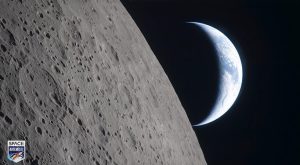 pard grew up in Derry, N.H. about 20 miles away from my hometown of Allenstown. The next year, our family stood in downtown Suncook, the next village over, as Shepard rode in a convertible in a parade held in his honor. I was hooked on space exploration, still am.
My Uncle Al was a career naval officer who served on the USS Wasp, an Essex-class carrier that used helicopters and frogmen to retrieve Gemini astronauts and their capsules in the mid-1960s. This gave him limited access to NASA swag. Several times, he procured autographed photos of astronauts and a few patches. I still have a couple of photos in my stuffed memorabilia file.
We moved to Texas in 1968. I became a paperboy for the Longview Daily News, the name of the afternoon edition. My route covered much of downtown and down Green Street to Marshall Avenue. I was a single-copy salesboy, sold each issue for a dime and got to keep a nickel. After the Apollo 11 crew landed on the moon on Sunday, July 20, 1969, the paper published an extra edition the next day. Yes, I got to yell, “Extra! Extra! Read all about it!” Even better, on the rare occasions when an extra was published, I got to keep the entire dime.
That July day, an elderly woman was sitting on her front porch as usual, despite the summer heat. I doubt her house had air-conditioning. She always bought a paper but was having none of this “Man on the Moon” extra I was peddling. She told me it had all been faked in a television studio. Sadly, some people still believe that.
I watched in horror on a tiny black-and-white television at The Rambler newspaper office in San Augustine — the little weekly I ran — on Jan. 28, 1986, when the Space Shuttle Challenger broke apart 73 seconds into its flight. On board was teacher Christa McAuliffe, from Concord, N.H., where I was born. All seven crew members died, and the American space program halted for 975 days.
Almost exactly 17 years later, Feb. 1, 2003, I stepped out of my house in Nacogdoches to head to work and heard a loud boom. “That must be the space shuttle entering the atmosphere,” I thought as I headed to town to have coffee with friends. A few minutes after I got there, reports began spreading about debris from Space Shuttle Columbia raining down across East Texas — especially in Nacogdoches and counties to the east. I was editor-publisher of The Daily Sentinel at the time and was soon directing coverage of the biggest — and most tragic — story of my journalism career.
The town soon filled with news trucks. Our newspaper office became the unofficial headquarters for a few dozen out-of-town journalists. Our small but mighty crew worked nearly nonstop for several days on the story. I remain proud and fond of those dedicated journalists, many of whom I stay connected with.
I have been avidly awaiting the launch of Artemis II and will be watching Friday evening with prayers for a safe landing. If all goes according to plan — and it probably will not — NASA will send a crew to land on the moon sometime in 2028. I will not be selling any “Extras” when that happens. (Likely, nobody will, given the decimation of the print newspaper model). But you can bet I will be watching.
(Photo courtesy of NASA)
Leave a reply
Fields marked with * are required